
2026 Suzuki DF150ATL and DF200ATL
Boat Reviews

Boat Review by: Rick Layzell
Date tested - August 28, 2026
Location – Longford Mills Ski Club
It is common in the manufacturing sector for research and development teams, a.k.a. designers and engineers, to create parts and systems that are utilized across multiple models. Think about buying a new vehicle where one platform is offered across multiple designs. Now think about the engine under the hood and how that base engine block design is configured to deliver multiple horsepower solutions to satisfy a wide array of consumer demands.
The benefits of this approach are meaningful as mass manufacturing of one ‘part’ lowers the overall manufacturing costs, which in turn drives down final consumer pricing. This also effectively reduces parts inventory and servicing costs.
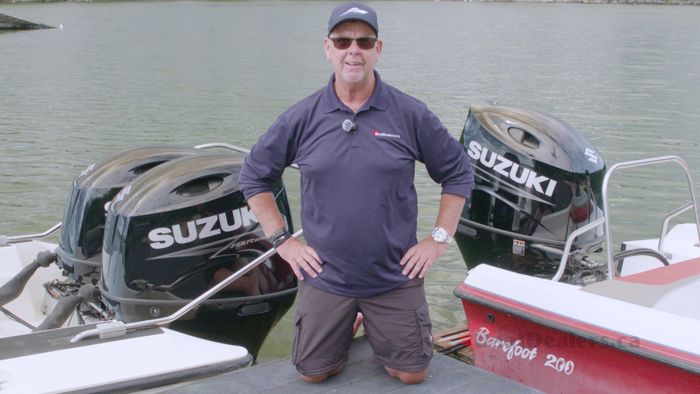
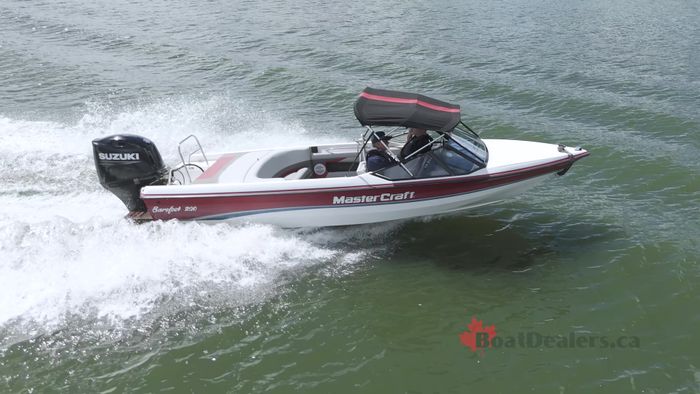
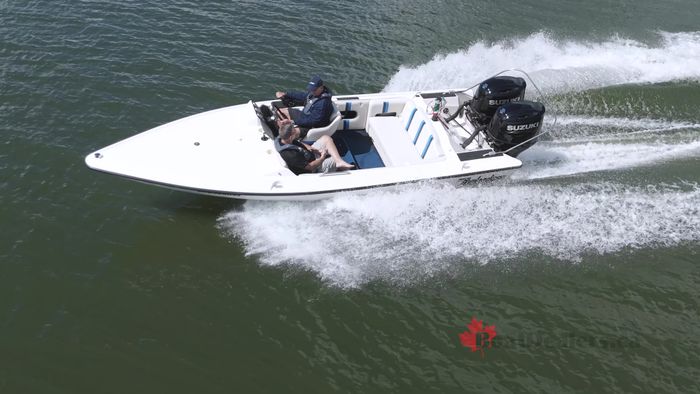
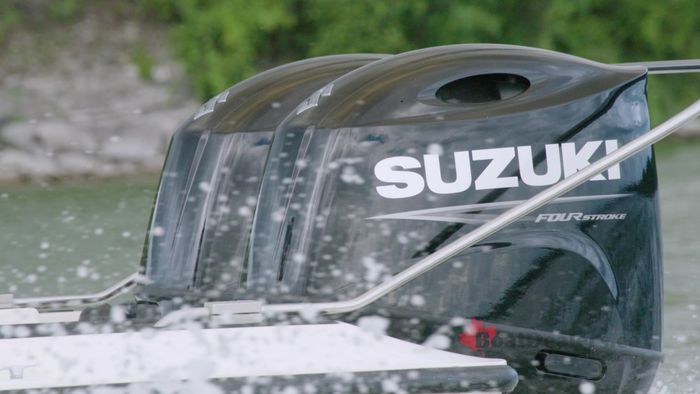
In outboard engines, this practice is very common, from small portable engines all the way through large horsepower offerings. Suzuki masterfully uses this approach in the 150/175/200 horsepower models, and we were given the opportunity to test a pair of boats that had recently been repowered: a MasterCraft 200 with a new DF200 and a Hydrodyne with a pair of DF150s.
The setting for the test was the Longford Mills Ski Club, which sits just outside of Orillia, Ontario on Lake St. John. Owners Tim and Kirsten knew several years back that their existing two-stroke engines were at the end of their serviceable life, and after looking at multiple market options they settled in on Suzuki as the best repower solution to meet the demands of their growing business.
Let’s take a dive into the engines and the benefits they have delivered to Tim and Kirsten as well as their clients.
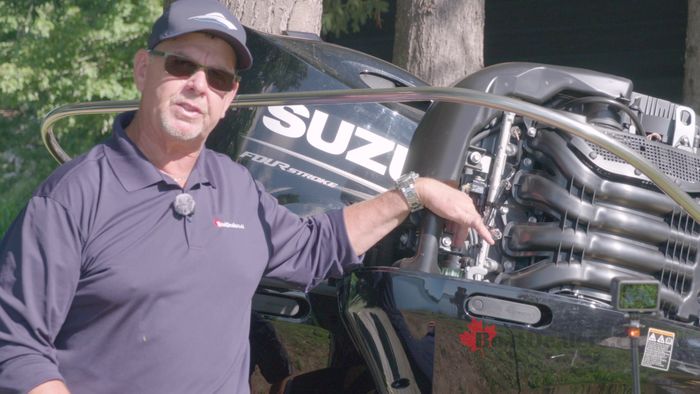
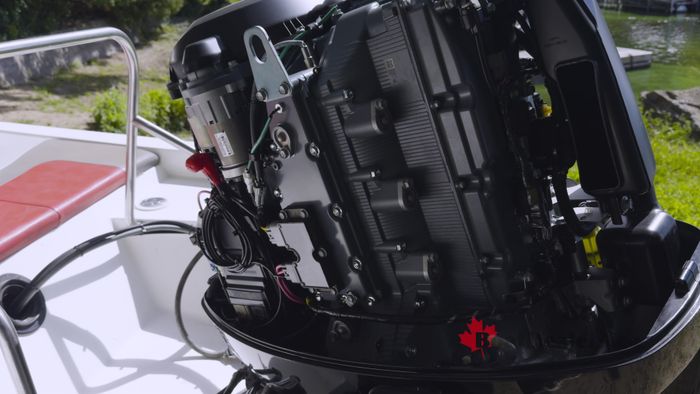
The engine block is an inline four-cylinder double overhead cam design with four valves per cylinder and a massive 2,867 cc 2.9-liter displacement. Transom height offerings are both 20” and 25” depending on your application and both models are available in traditional mechanical throttle and shift technology, which we tested, as well as Suzuki’s Precision Control digital technology. With engine weight at a svelte 518 lbs (236 kg), there are endless applications where these engines will provide exceptional results – think repower, pontoon, fish, cruise, workboat, and more.
The combination of a high 10.2:1 compression ratio and large displacement play key roles in delivering performance. In simple terms, the large displacement delivers both torque and acceleration. Add in a high compression ratio and the benefit is more output via the combustion process. In other words, performance.
Even the engine cowling plays a role in its capability, thanks to Suzuki’s semi-direct air intake system. The cowling framework pulls cool air inside the engine through a rear vent system directly connected to a ducting framework inside the cowling. The cool air is forced into the multi-stage induction module which targets operational efficiency by maximizing acceleration and top-end speed. We also noted the Multi-Stage Induction (MSI) system which is designed to answer the massive air demands required at higher speeds. MSI accomplishes this by utilizing a specially designed intake manifold which ensures the engine is receiving the correct volume of air throughout the entire RPM range–shorter runs for high RPM and longer runs for low RPM.
Vibration on outboard engines is also a reality. We mount an engine block, which carries the bulk of the weight, on top of a mid-shaft which connects to the lower unit. Suzuki has developed a vibration reduction system by using an offset driveshaft. The crankshaft is positioned in front of the driveshaft to pull the center of gravity forward. This, in turn, moves the engine’s inertia point up and over the transom, thus reducing vibration noticeably. And if that’s not enough, Suzuki’s engineers even incorporated a two-stage gear reduction system which takes advantage of the engine’s power capabilities to deliver industry-leading torque, not to mention excellent acceleration and top-end speed.
It should also be noted these engines are built to run and perform on regular 87-octane fuel which saves countless dollars at the pump. Suzuki even protects your investment with the inclusion of a standard water detection system. This will detect moisture in the fuel and, if noted, sends both a visual and an audio warning to the helm station. Put all these features together and you’re guaranteed to have the capability of spending more time on the water and less dealing with maintenance and repairs.
Given the variety of applications these engines will suit, along with their ability to perform in both salt and freshwater environments, I was pleased to see a pair of engine flush ports. This adds longevity to the cooling system and they’re accessible whether the engine is in the water or on the trailer. Smart.
The first boat we ran was the DF200 on a MasterCraft hull. First impression: I loved the throttle growl when I turned the key. It was immediately followed by a whisper-quiet purr at idle. That purr continued as we ran the boat up and down the lake at a variety of RPM ranges. With a decibel meter on board, we smiled after noting dockside idle ratings of only 50 dB. With the engine running at 3,900 RPM and the boat cruising at 24.6 mph, the decibel meter recorded a very supple 77 dB.
On a sleek hull like the MasterCraft, it’s nearly impossible to get away from vibration. These boats sit low in the water while their relatively flat hulls are designed to release minimal wake for watersports. The offset driveshaft was a major win as the interior vibration with 200 horsepower on the transom was negligible at best.
Then we swapped out and I had my opportunity to play, I mean, work, with Hydrodyne and the twin DF150s. Boy, was she quick. Keep in mind that this setup is rigged for competitive ski school training and the boat can pull up to 12 skiers at one time. I normally track holeshot time when I perform boat tests, and the owner of the club was quick to warn me that the holeshot would be blistering. Yeah, that was an understatement. With Suzuki’s National Sales Manager sitting in the passenger seat, we could not click the stopwatch fast enough. Out of the hole in a proverbial nano second. Wow.
With my adrenaline satisfied, we went back to work running the boat through multiple passes at a variety of RPMs. The starting sounds were as satisfying as firing up the single 200 and the idle sounds on the twin 150s were also negligible. I figured that with twins the decibel meter would show higher numbers. Wrong again, Ricky. Twin 150s, 26 MPH on the gauge, 3,200 RPM, and the decibel ratings were once again a mere 77 dB.
I took the opportunity to ask the owners of the club about fuel economy and maintenance costs. Tim was quick to point out that maintenance costs (a.k.a. oil changes) were close to nil versus the cost of two-stroke oil and that fuel savings were huge.
Suzuki’s engineers and research and development experts were clearly mandated to deliver a product that would satisfy multiple market applications and an endless array of repowering opportunities. What they produced delivers blistering torque, wicked acceleration, great top-end speed, and a shockingly quiet boating experience. I tip my hat to each one of them on a job very well done.


 RVs for Sale
 Motorcycles for Sale
 Outboards for Sale
 ATVs for Sale
 Sleds for Sale


