
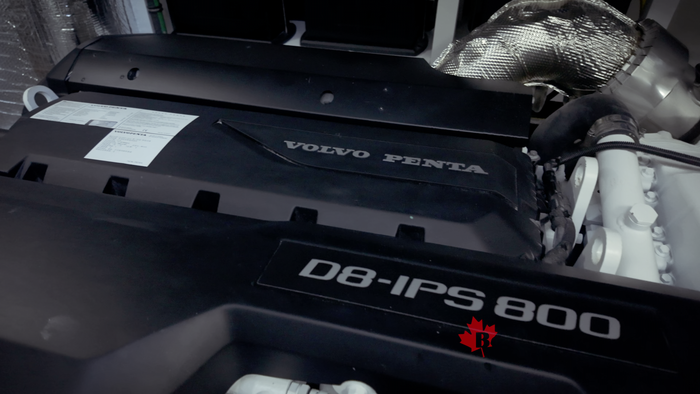
Volvo Penta D8-IPS800
Boat Reviews

Boat Review by: Rick Layzell
Across the globe, the Volvo brand is highly respected for its commitment to quality products with market leading technology. Whether it’s their commitment to the auto sector, commercial trucking, heavy construction equipment, or autonomous offerings, Volvo is a proven global market leader.
In the marine industry, Volvo Penta has been quietly aligned many of the leading boat and yacht manufacturers around the globe. The number of ‘industry firsts’ from Volvo Penta is staggering and includes sterndrive, duoprop, forward facing drives, and IPS (Inboard Performance System) pod type drives.
Fun Fact – Volvo Penta has led the IPS market since its launch in 2005 and have proudly installed over 30,000 units globally. Impressive.
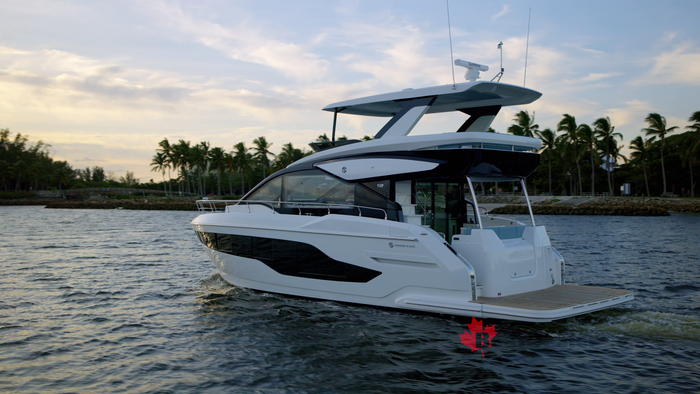
Needless to say, we were thrilled to be invited to review a pair of D8-IPS800’s at the Fort Lauderdale International Boat Show. The engines were beautifully synchronized with the global launch of the all new Cruisers Yachts 50 Fly.
There is much to say, and this review will cover the benefits of the engine & drive pairing as well as the technological benefits of the Volvo Penta Electronic Vessel Control system.
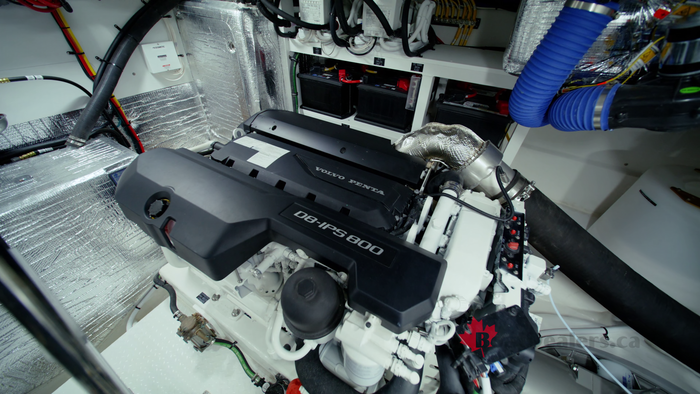
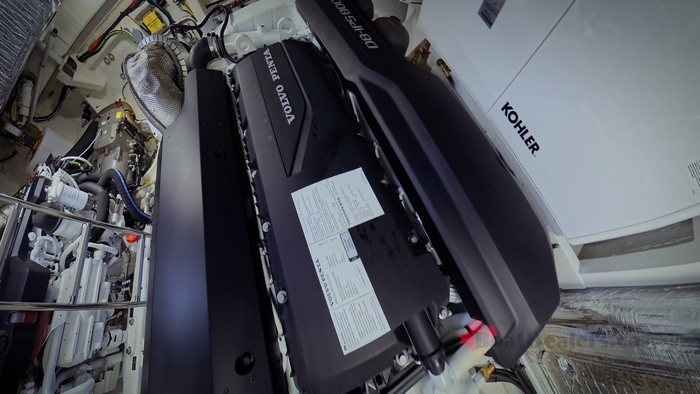
Smiling as I lowered myself into the spacious and well-lit engine room, I was greeted by twin 7.7L, in-line 6-cylinder, 470 cubic inch engines each yielding 600 crankshaft HP. Thanks to Volvo Penta’s marine specific designs, they create a compact engine with a slim, low profile. There’s an appreciable amount of room for maintenance around these beauties. Your local marina technician will enjoy easy access to air, fuel, and oil filters and so will your wallet as Volvo Penta’s design process helps keeps operational costs low. The engines feature four valves per cylinder, turbo and super charger systems for fast acceleration, and virtually no exhaust smoke.
Under the proverbial ‘hood’ is an incredible torque curve which delivers quick torque increase at low RPMs, resulting in faster on-plane speeds and great fuel economy in the critical cruising RPM range.
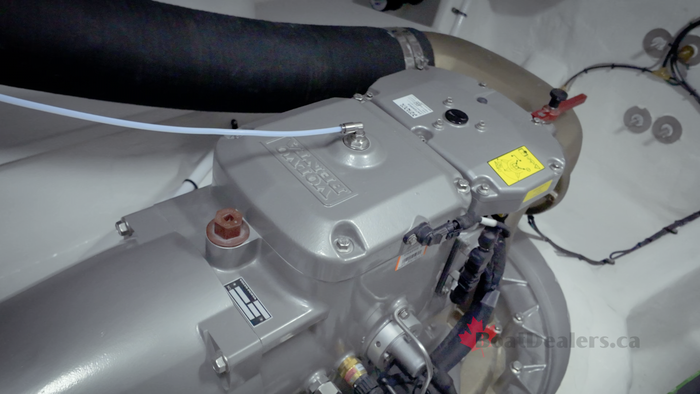
The IPS package features twin, forward-facing, counter-rotating props which are noted by Volvo Penta as 30% more fuel efficient than comparable straight shaft inboard installations.
A user friendly feature of the IPS drives is ready access to change drive oil without the need for an engine/drive system haul out. This is another great example of Volvo Penta’s commitment to lowering overall cost of ownership.
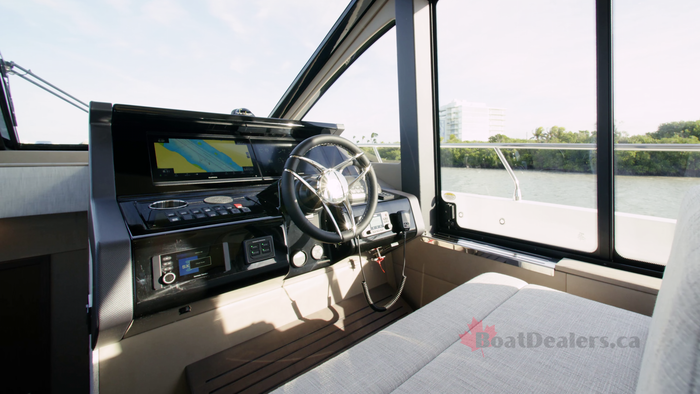
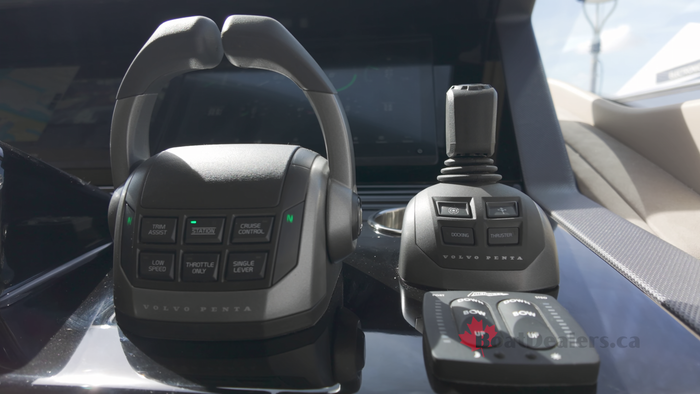
Moving to the helm, my time had come to get a refresher on Volvo Penta’s Electronic Vessel Control. This incorporates several unique technologies including Glass Cockpit, Joystick Control, and Dynamic Positioning.
Each of these systems embody the brand’s commitment to ‘Easy Boating.’ This relieves captains of the usual protocol of two levers at the helm requiring countless decisions to the electronic controls. Instead the operational aspects shift to joystick control with built-in software features that counter and adjust to the effects of wind and current. About a decade ago, we saw the early benefits of fly-by-wire technology that offered smoother steering and more efficient shifting and throttle operations. Adding joystick technology makes giving user input to move the boat forward, sideways, or in full rotation even easier. Think about the benefits in near quarters like fuel docks and docking in a busy harbour.
On the subject of easier boating, Assisted Docking utilizes the same satellite system as GPS technology. The system sets up a ‘lane’ to hold the boat in position so the operator doesn’t have to worry about wind or current. They can calmly and slowly maneuver the boat into the marina when ready. Smooth as silk. On a related note, the Dynamic Positioning system holds the boat in a fixed position. Think about wait times at a bridge or fuel dock, or even just a moment to breathe while setting fenders and lines. Dynamic positioning removes drifting – keeping the vessel in position while awaiting your next command.
Joystick control delivers exceptional operator benefits during long range cruising. The captain can control steering, throttle, and shift all via the joystick. With the system in the neutral position, a simple nudge forward activates the joystick and eases the boat into gear. In addition, autopilot and cruise control can both be activated to move the boat at your choice of desired cruising speeds and headings. A simple bump of the joystick gives the operator back full vessel control.
At the apex of it all is the Glass Cockpit. The screens at the helm are a data analysis center featuring charts, sonar, onboard cameras, engine, and systems data. The system overlays proprietary Volvo Penta technology to display fault codes and features like dynamic positioning, joystick driving, and assisted docking. Everything you need to know – and more – is there.
As technology continues to advance and ‘Easy Boating’ becomes part of the daily experience for recreational boaters, Volvo Penta will remain firmly entrenched as an industry leader. With an already proven capacity to blend technology, corporate commitment to leadership, and a passion for delivering exceptional on-water experiences, boaters will benefit from the innovative and user-friendly engineering of Volvo Penta for years to come.


 RVs for Sale
 Motorcycles for Sale
 Outboards for Sale
 ATVs for Sale
 Sleds for Sale


