
Volvo Penta V6 280 HP
Boat Reviews

Boat Review by: Rick Layzell
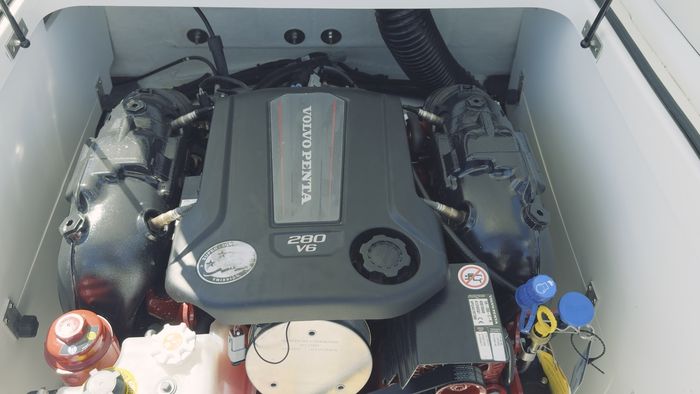
There is no denying Volvo Penta’s position as a global market leader and industry innovator. Their list of industry “firsts” is exceptional and includes the first sterndrive, dual propeller option, forward facing drive solution, joystick control system, and so much more.
So, when considering your next boat, if a V6 is the right power choice for you, why not entrust the Volvo Penta legacy behind your purchase? Enter the V6 series.
Let’s first glimpse at the number of engine variations available.
The SX series offers your choice of 200, 250, or 280 HP in a single prop platform.
The DP series offers your choice of 200, 250, or 280 HP in a duoprop platform.
The FWD series gives you the option of 250 or 280 HP in a forward-facing drive.
If those eight options aren’t enough for you, all of them are available with or without a catalytic converter. That’s a tremendous number of choices and value-priced options to suit your specific needs.
The entire V6 lineup is based on a 4.3L GM-built aluminum block design, which is marinized under the scrutiny by Volvo Penta personnel at their Tennessee facility. GM builds up to 4,000 engine blocks per day, so a joint venture using their expertise makes absolute sense. The common platform supports not only performance, but the parts supply chain as well, making serviceability better for all owners. An aluminum block means an excellent power:weight ratio, too.
Within the engine are several noteworthy features worth discussion. Variable camshaft timing delivers an outstanding linear power curve. As opposed to traditional power curves that peak around 80% and tail off, the 4.3L V6 design provides consistent power from idle all the way to its maximum 5,800 RPM. I can say from experience that the power range is exceptional. A closed-loop cooling system optimizes fuel delivery and reduces emissions; we can all get on board with that.
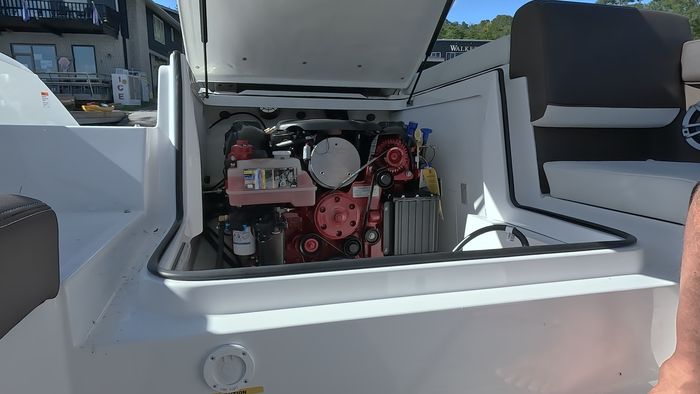
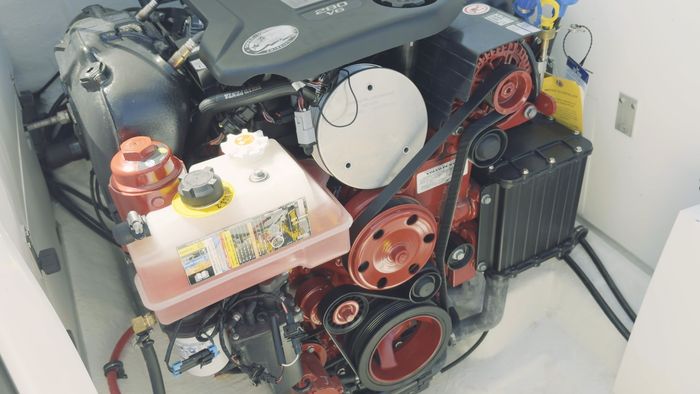
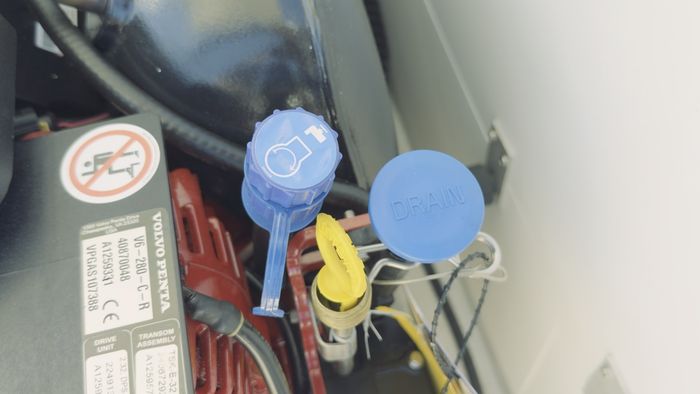
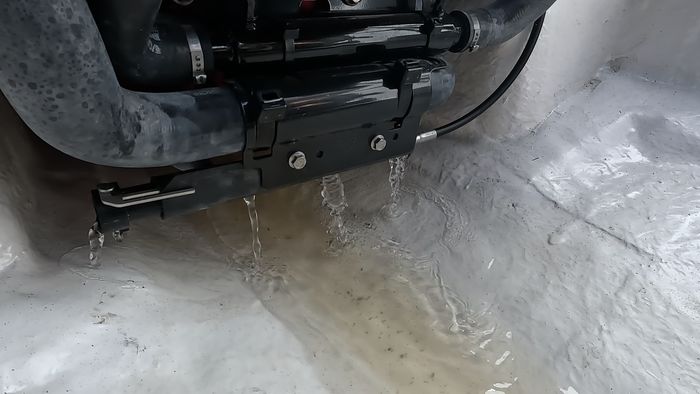
Living in a part of the world with a short boating season, I am a huge fan of the Easy Drain feature. Simply pull the accessible cotter pin, push down on the big, blue Easy Drain knob on the port side of the engine (conveniently mounted at the front, by the way), and watch the engine block water drain into the bilge. Then raise the blue knob back up, put the cotter pin back in place, and just like that your boating season has been safely extended. Incredibly handy.
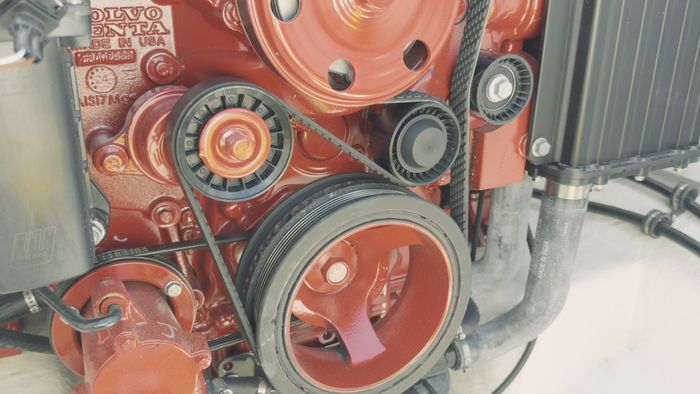
I was impressed with what Volvo Penta calls the Front End Access Drive. This is a common ‘plate’ across the V6 series that mounts on the front – meaning very accessible maintenance for the DIY crowd or trained technicians. Of note to me were both the oil and fuel filters, the serpentine belt, and the impeller, all key components and all easily accessible. This is a subtle yet extremely smart orientation.
While preparing for our test day, I also read with a smile that, just like her larger siblings, every V6 from Volvo Penta comes with a full five year factory warranty. Very nice. I also learned that, should a question come up that requires expert answers, communications take place with actual Volvo Penta factory personnel. That’s infinitely better than a call center, and a detail that helps foster lifetime customers. Your warranty is also fully transferable at no cost, so if sell your boat after a few years, you also transfer the remaining factory warranty. An extended warranty is readily available, too. If you want to purchase another two years, and make it a total of seven years, of factory backed warranty you can do that.
Another conversation worth having with your sales representative is Volvo Penta’s commitment to lowering the total cost of ownership. Backed by common parts in the supply chain, longer scheduled maintenance periods, quick access to wear items via the Front End Access Drive (meaning reduced labour costs), Volvo Penta is works hard to reduce your overall maintenance cost over the lifespan of the engine.
With our dockside review and on-camera work completed, it was finally time to move to put the boat into action. We were testing on Lake Muskoka in central Ontario on a 26 C degree (84 F) day with no wind and weekday boat traffic. Seriously, it doesn’t get much better than that.
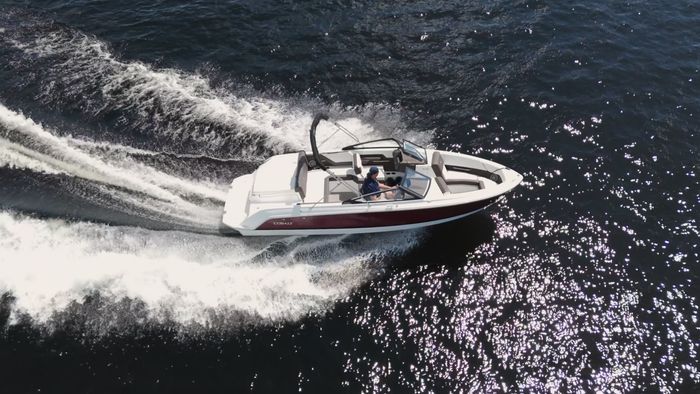
I eased away from the docks with 20% fuel on board and our camera guru staying on land to prepare the drone for overhead shots. My first impression was how quiet the V6 runs with just a subtle shift into gear and a cautious move around other boats in the docks. There was virtually near zero sound of any kind. Once I was safely offshore and the drive trimmed fully down, I experienced my first hole shot moment. Admittedly I showed up that day somewhat skeptical that a 280 HP V6 could excite this captain on a nearly 4,000 lb. boat like the Cobalt CS22.
I was wrong. Very wrong.
This is an engine and hull combination made in the heavens. The hole shots yielded very consistent and impressive runs under four seconds to plane. Very sweet. And I was just getting started.
Knowing that our camera guy Jeff likes drone footage with me running the boat at 18-20 mph, it gave me the opportunity to discover my first cruising speed which readily settled in at 18 mph at 2,830 RPM. That V6 was purring like a kitten and the boat rose up out of the water, comfortably and confidently, aided by only a bit of trim.
The harmony was just beginning.
After twisting and turning through figure 8’s to satisfy Jeff’s drone needs and my own curiosity, we then moved on to some running footage using more power. At this point Jeff hops onboard the partner boat and we shoot side-by-side to show her off in the water. Cruising speed number two settled in at 30 mph at 3,780 RPM and a little better than 1/3 trim. Keep in mind that your results will vary based on fuel, crew, and gear on board, but from my perspective both cruising speeds were on point.
With Jeff satisfied that his memory cards were filled with great visuals, he jumped on board the Cobalt and we completed the hole shot timing trials and, finally (and safely) our top speed runs. I admitted to my skepticism earlier – there is no doubt I had thoughts of where top speed would land, and I was thrilled to be wrong again.
With two of us on board, plus camera gear and roughly 35 L of fuel, the combination delivered smiles over and over. We completed three top speed runs during which we also experienced the full linear power curve – throttling up from mid-range and watching the power curve come into play is incredible. Top speed passes delivered results of 46 MPH at 5,500 RPM. This is excellent for this combination. More importantly, those mid-range results are going to satisfy any owner.
When the engine for your boat makes 200–280 HP V6 engines, not to mention 300–430 HP V8’s, it brings a degree of comfort knowing that your vessel and its power carry a history of hard-earned success. That puts an owner at ease, and it gives them trust in where they’ve placed their hard-earned money. Knowing that the engine in your boat was built with a devout commitment to quality and customer experience makes the Volvo Penta V6 a smart decision.


 RVs for Sale
 Motorcycles for Sale
 Outboards for Sale
 ATVs for Sale
 Sleds for Sale


