
2026 Suzuki DF300AP Review
Boat Reviews

Boat Review by: Rick Layzell
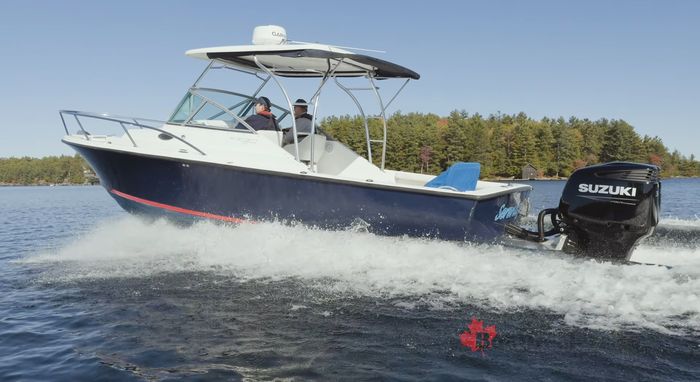
The outboard engine market has grown in leaps and bounds as new technology, coupled with growth in engine horsepower options, has given consumers an array of choices for any need. During this growth period, Suzuki has earned gains in both their market share and consumer confidence with a lineup that is answering the call with exceptional reliability.
In the larger engine market arena, Suzuki’s DF300AP V6 engines, in particular, are striking fear in the competition by winning with both the industry and the consumer.
Suzuki has clearly given their engineering team a wide berth to develop unique technologies. In response, they have created competitive advantages that meet consumer demands. The 300 series is at the heart of this transition.
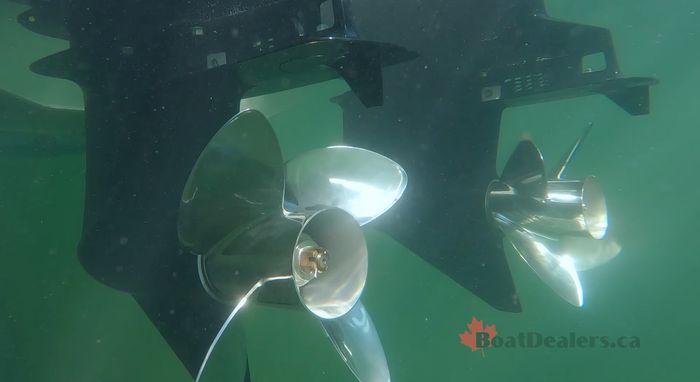
It starts with Suzuki Selective Rotation. In twin engine applications, typically a right hand rotation model is paired with a left hand rotation model. This requires both additional engine and parts inventories at the dealer level, which creates higher cost. Selective Rotation changes the game. The DF300AP is built with Suzuki’s specially designed counter rotating lower unit gear ratio. It also houses a unique switch that can be readily connected to an electrical circuit on the power head – converting a right hand rotation model into counter rotating. This equals lower cost of inventory at the dealer level and lower cost of ownership if parts are ever needed.
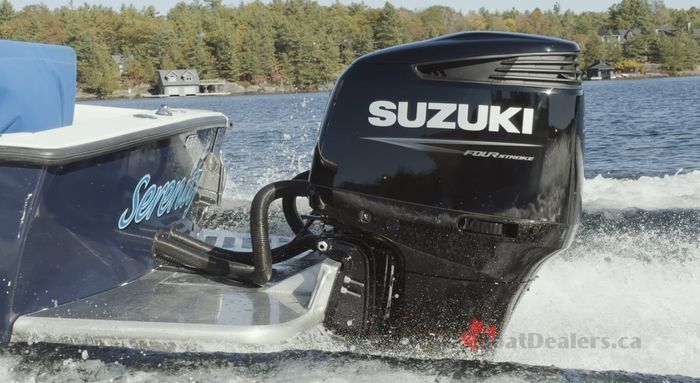
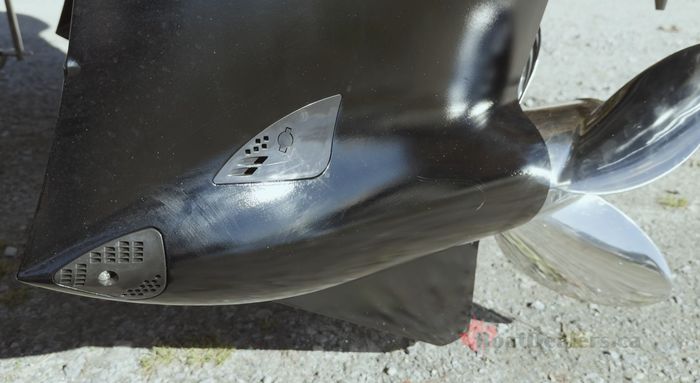
The Suzuki gear case is outfitted with twin water pick ups. This dual configuration increases water flow for better cooling solutions as the forward water pick up services the engine at high speeds while the second inlet is mounted lower to serve the engines needs in shallow water conditions.
The gear case of this model was completely redesigned from it’s predecessor to provide a smoother, more hydronamic shape which performs with less drag and greater overall efficiency.
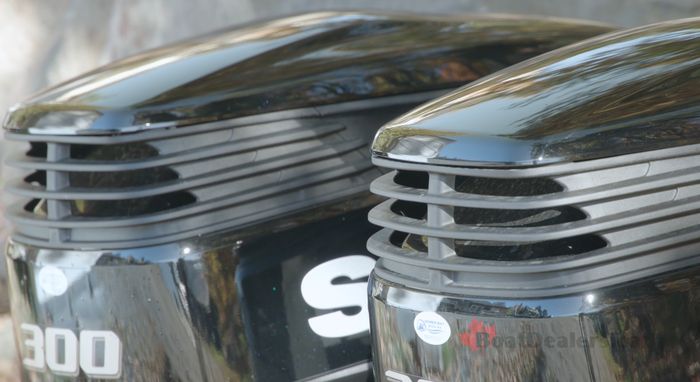
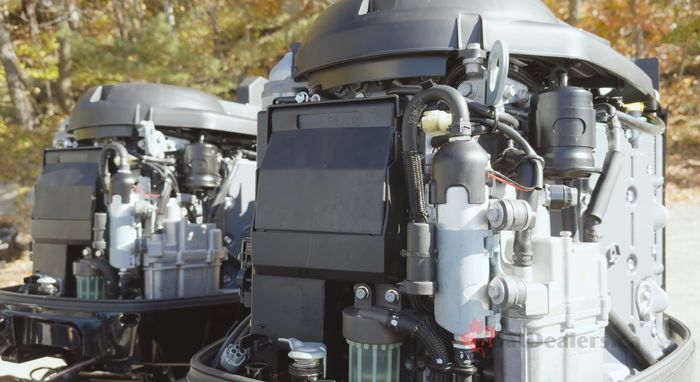
Moving to the powerhead, the engine cowling itself has a larger air induction port which serves to maximize airflow into the engine delivering maximum output and strong low and mid range torque. A long track intake manifold provides smooth airflow into the engines which yield enhanced low end power.
Inside the engine, Suzuki borrowed their proven and trustworthy Lean Burn Control System from the 300’s smaller siblings. This predicts fuel needs based on operational conditions which allows the engine to run on a more efficient fuel mixture. Fuel economy is exceptional with the greatest improvements targeted at low RPM and cruising speeds.
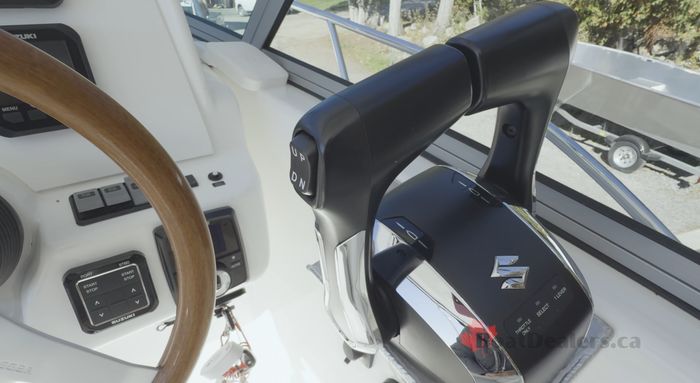
Fly-by-wire has become the norm for many larger outboard installations and Suzuki’s Precision Control technology answers the call here. With throttle and shift cables replaced by onboard computer systems, friction, resistance and wear are now things of the past. Precision Control also delivers silky smooth and decisive shifting.
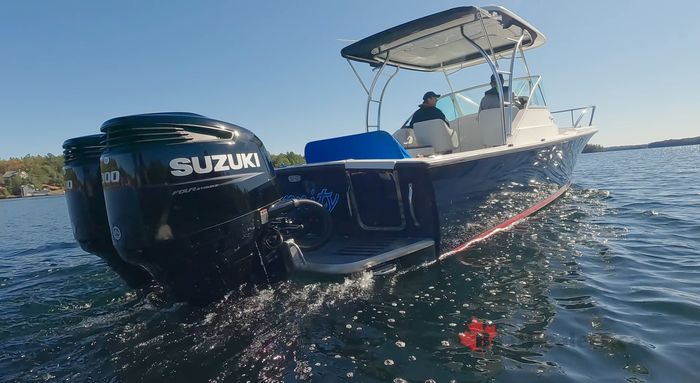
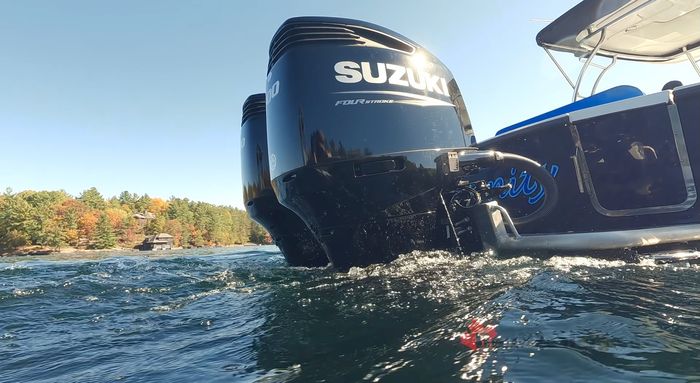
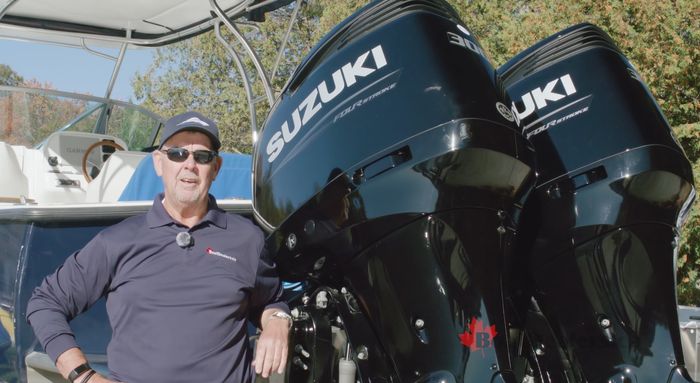
How does all this work in the real world? We had the pleasure of testing a pair of DF300 AP’s on a 27’ fiberglass center console that was approximately 20 years old. She had originally been delivered with a single inboard that served the customer well but was no longer meeting their needs for power or reliability.
The local Suzuki dealer brought in a fabricating shop to design and fit a custom bracket on the transom and then went to work on the engines installation.
My first impression was how quiet the engines operate. With push button starting at the helm, both 300s lit up with a gulp of air and purred quietly at the dock. As the boat was first shifted into reverse, the supple sound of shifting was notable and immediately appreciable. We moved into the open bay with 600HP on the transom anxiously awaiting our commands. Easing the throttle – digital technology means you can operate the helm as a dual binnacle or push a button and run both engines with one shifter – felt great. We pushed the throttle down just a bit to get a sense of engine noise and the 600 HP responded with nothing more than a continued purr. The boat was quickly and efficiently on plane and cruising speeds were an endless array of options.
Our scenario had two of us on board with a couple hundred liters of fuel, standard safety gear and the owners own provisions. We ran the boat like a typical day on the water.
The DF300s performed extremely well in all engine RPM ranges. We noted excellent performance in mid range – 3,800 to 4,200 RPM seemed to be the proverbial sweet spot and the top end results were nothing short of spectacular.
I was admittedly surprised by how strong the mid-range power is on these engines. Not surprising was the fact that hole shot tests with twin 300s would push us back in our seats. What was surprising was the same feeling when the throttle was pushed in mid range. The amount of torque is exceptional.
There are many places where these technological marvels would suit consumers needs. From a new boat ownership experience to a repower solution, from a fiberglass hull to a powerful pontoon package, the Suzuki DF300 AP engines have broad appeal and should definitely be considered as your next power choice.



 RVs for Sale
 Motorcycles for Sale
 Outboards for Sale
 ATVs for Sale
 Sleds for Sale


